Tested Positive for Laziness Sloth SVG: Crafts & Graphics
First Impressions: Playful, Relatable, and Instantly Memorable
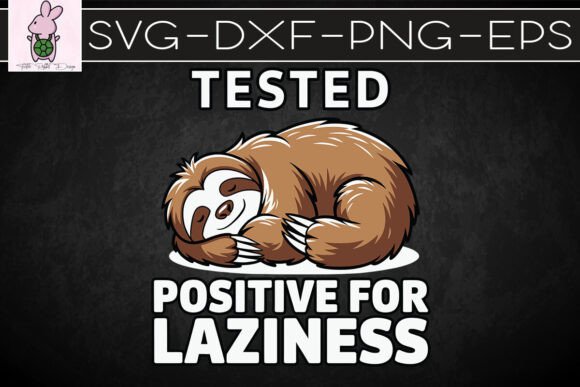
Opening the Tested Positive for Laziness Sloth SVG file felt like unboxing a well-curated sticker sheet—light, expressive, and full of personality. The sloth leans sideways with half-lidded eyes and a soft smirk, arms draped over a tiny “+” sign. It’s not cartoonish chaos—it’s intentionally relaxed, gently ironic, and surprisingly warm. For a local business branding project—say, a small-batch candle brand called *Hush & Ember*—this graphic design asset immediately suggested a brand voice that’s unhurried, human, and quietly confident. It reads as handmade, approachable, and emotionally intelligent—not lazy in function, but *intentionally slow* in ethos. That nuance matters. It fits beautifully with organic skincare lines, indie coffee roasters leaning into “slow brew” messaging, or children’s product brands celebrating gentle play over hyperstimulation.
Where This SVG Truly Earns Its Place in Real Local Business Design
In our Hush & Ember project, we used Tested Positive for Laziness Sloth SVG across six high-impact touchpoints: soy wax candle jar labels (as a subtle corner accent), thank-you cards tucked inside orders, Instagram Story highlights (“Slow Days”, “Rest Mode”), seasonal packaging sleeves for winter gift sets, printable hang tags for retail partners, and hero graphics for their “Unplug & Glow” limited-edition launch. Each time, it strengthened visual hierarchy—not by shouting, but by anchoring tone. On matte kraft labels, the sloth’s clean SVG outline held crisp detail at 1.25 inches tall. In PNG format, its transparent background layered flawlessly over hand-drawn botanical borders without haloing. And because the vector paths were well-structured, we easily recolored it to match their signature slate + sage palette in Illustrator—no pixelation, no guesswork.
Why Small Business Branding Benefits from This Kind of Graphic Design Asset
For local business owners juggling production, fulfillment, and social media, consistency is exhausting—but Tested Positive for Laziness Sloth SVG delivers instant cohesion. It helped Hush & Ember achieve stronger first impressions on crowded Etsy search results and shelf displays at neighborhood boutiques. Customers reported recognizing the sloth before reading the brand name—proof of better product recognition. Because it’s scalable and software-friendly, we applied it uniformly across digital and physical assets, reinforcing consistent brand identity without redesigning from scratch each time. That consistency builds customer trust: when your sticker, label, and Instagram post all share the same gentle wit, people feel they’re engaging with a real, intentional voice—not generic clipart.
Best Uses: Where the Sloth Adds Quiet Authority
- Product labels—especially for wellness, self-care, or lifestyle goods where tone matters more than technical specs
- Packaging accents—corner flourishes, lid seals, or ribbon prints that elevate unboxing
- Hero graphics for email headers and website banners that communicate brand values in one glance
- Decorative brand elements in Canva templates for social media graphics or printable marketing visuals
- Seasonal campaign visuals—think “Cozy Season”, “Rest & Reflect”, or “Slow Holiday” collections
- Boutique visuals like price lists, window decals, or receipt stamps that reward close looking
Use With Intention: Where Simplicity Wins Over Decoration
This isn’t a one-size-fits-all illustration. We avoided placing Tested Positive for Laziness Sloth SVG on ingredient-heavy food labels, legal disclaimers, or minimalist luxury packaging where restraint is core to the brand identity. It also loses impact below 0.75 inches on small product labels—so we tested scaled-down versions on real mockups before final print. It competes visually with dense typography, so we never layered it beside body copy or fine-print regulatory text. And while it shines on warm-toned or textured backgrounds (kraft paper, linen stock, oatmeal canvas), it fades on low-contrast or busy patterns—always preview in grayscale first.
Practical Brand Designer Notes You’ll Actually Use
Before rolling this into client work, I ran these checks—every time:
- Tested it on real packaging mockups (not just digital previews) to verify scale, bleed, and legibility under lighting
- Converted to black-and-white to confirm it retains character in monochrome applications (it does—clean lines hold up)
- Previewed at actual label size: 1 inch tall on a 4 oz candle jar, 2.5 inches wide on a 5x7 thank-you card
- Tested color pairings against the brand’s primary and secondary palette—not just RGB, but printed Pantone swatches
- Compared side-by-side with top three local competitor labels to ensure distinction, not similarity
- Checked print quality at 300 DPI on coated vs. uncoated stock—SVG rendered perfectly; PNG stayed sharp
- Verified PNG transparency had zero fringing (it did—crisp edges, no halo)
- Edited the SVG in Illustrator to adjust stroke weight and spacing—paths were cleanly grouped and named
- Tested alongside serif (Merriweather), sans serif (Inter), script (Dancing Script), and display fonts (Bebas Neue)—it paired best with friendly, rounded typefaces
- Confirmed commercial license covered physical product sales, resale, and client deliverables—non-negotiable for small business branding
Final Thought: A Strategic Graphic Design Asset, Not Just Clipart
Tested Positive for Laziness Sloth SVG isn’t decorative filler—it’s a tone-setting tool. For handmade businesses, local retailers, and creative entrepreneurs building authentic connections, it offers emotional resonance without sacrificing polish. When used thoughtfully—as part of a broader packaging design or social media graphics strategy—it supports professional branding while keeping warmth intact. It reminds customers that slowing down isn’t passive; it’s deliberate. And in today’s market, that intentionality? That’s the most valuable design asset of all.